


Yatra yatra mano yāti tatra tatra śivo’vasthitaḥ
Wherever awareness moves, Shiva is already present.
Most companies still believe branding is about visibility. The strongest global brands have already moved beyond that.
They understand something uncomfortable: The human brain trusts signals faster than explanations. That shift is quietly changing branding across the world.
Especially now.
Because AI has made communication infinite.
Every company can generate:
campaigns
thought leadership
ads
blogs
strategy decks
“visionary” messaging
within minutes.
Which means talking more is no longer a competitive advantage.
In many industries, it is becoming a trust liability.
The future belongs to brands that understand how to signal authority before they explain authority. That is where branding is heading now.
Not louder communication.
Perceived certainty.
The most powerful global brands increasingly rely on signaling instead of excessive communication because human decision-making interprets symbols, consistency, restraint, and perceived confidence faster than verbal explanation. In overloaded markets, trust is often formed before logic fully engages, making subtle perception signals more influential than aggressive messaging.
Why Silent Brands Feel More Powerful
People rarely say this openly, but most executives distrust brands that try too hard to convince them. Over-explaining creates suspicion.
Because confidence behaves differently. Strong brands rarely appear desperate for attention. That psychological pattern shapes how authority is perceived globally.
Think about brands like Hermès or Rolex.
They do not flood consumers with urgency messaging every hour.
In fact, their restraint becomes the signal.
The silence itself communicates:
stability
confidence
demand
control
permanence
The brain interprets scarcity of communication as scarcity of need. And scarcity increases perceived value. This is where most brands fail today.
They mistake visibility for trust.
But visibility without perceived certainty often creates noise, not authority.
That is the deeper meaning behind:
Wherever awareness moves, perception already follows.
In business, attention automatically searches for signals that reduce uncertainty. The brands shaping those signals quietly shape decisions before comparison even begins.
The AI Era Is Making Loud Branding Weaker
The internet is entering an exhaustion phase.
Executives are now exposed to endless:
AI-generated content
repetitive thought leadership
“industry insights”
motivational business language
predictive trend reports
Most of it sounds structurally identical.
This creates what can be called:
Trust Saturation
Where excessive communication lowers perceived differentiation. That changes branding strategy completely. In the next decade, the strongest companies may communicate less publicly while increasing:
symbolic consistency
ecosystem positioning
behavioral trust signals
selective visibility
contextual presence
Because signaling scales better than explanation. Explanation requires attention. Signals influence perception passively. That difference matters enormously in overloaded decision environments. This is why some companies dominate industries while speaking surprisingly little. Their presence itself becomes interpreted as authority.
The Hidden Psychology Behind Signaling
Human beings rarely evaluate brands objectively.
We infer trust through patterns.
The brain constantly asks:
Does this feel stable?
Does this feel socially validated?
Does this feel risky?
Does this feel premium?
Does this feel chosen by others already?
Most of these judgments happen before conscious analysis.
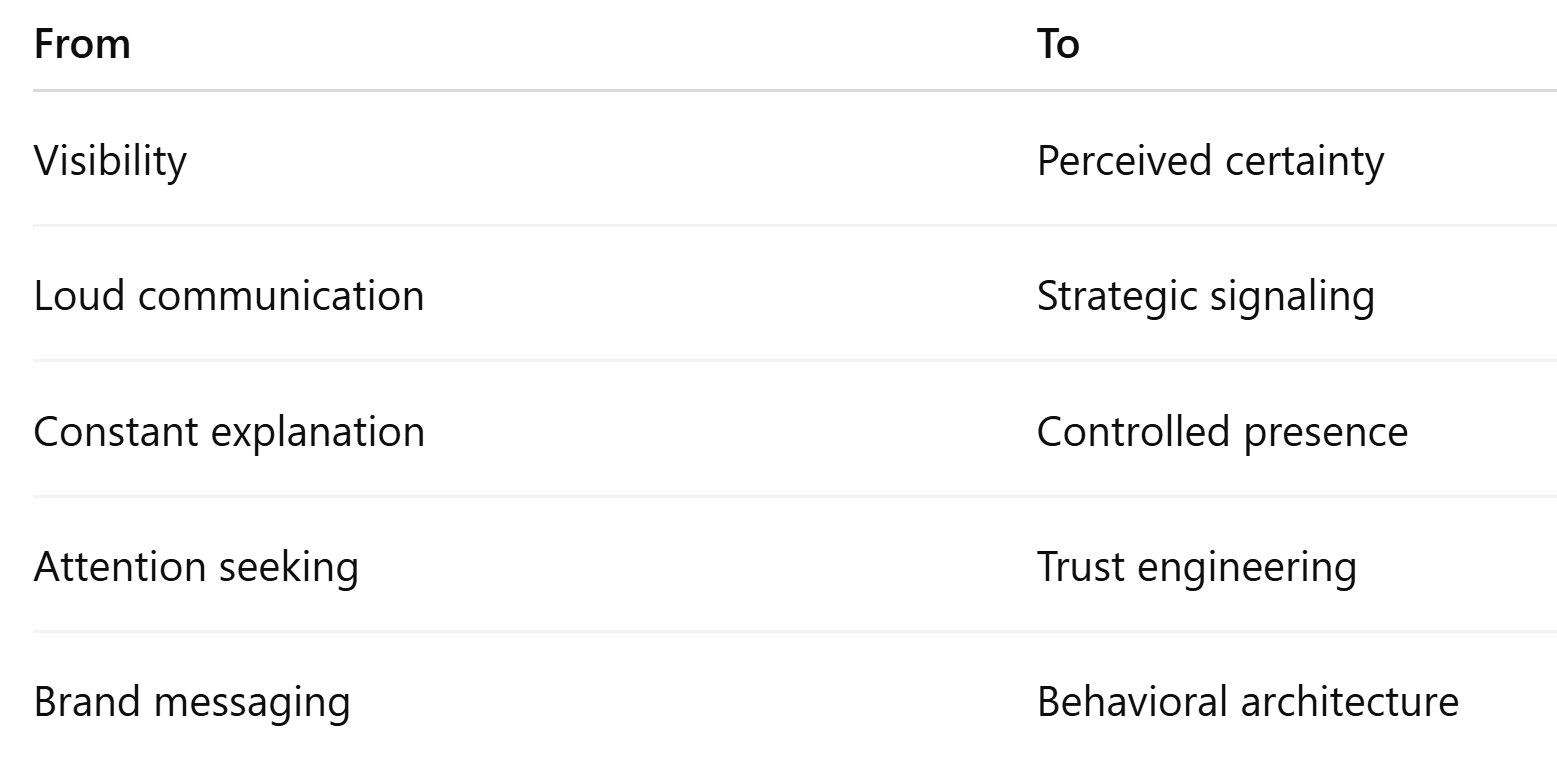
This is why signaling is becoming more powerful than messaging itself.
A brand’s:
partnerships
design restraint
hiring quality
client ecosystem
response timing
leadership behavior
platform selection
often influence trust more than direct advertising.
Case Study: How Apple Signals Power Without Explaining It
Apple rarely behaves like a company trying to persuade people aggressively.
That is precisely why its branding feels powerful.
The company signals authority through:
controlled product releases
minimalist communication
ecosystem consistency
visual restraint
selective appearances
Even product launches are paced carefully.
Anticipation builds long before explanation arrives.
Apple understands something most brands still miss:
People emotionally interpret confidence before they rationally analyze capability.
That is why the company rarely overloads communication with technical justification.
The ecosystem itself becomes the signal.
The stores.
The packaging.
The waiting lists.
The keynote pacing.
The consistency.
Together, these reduce perceived uncertainty before comparison even begins.
Most brands communicate value.
Apple engineers interpreted inevitability.
That difference is why some companies become culturally dominant while others remain visible but forgettable.
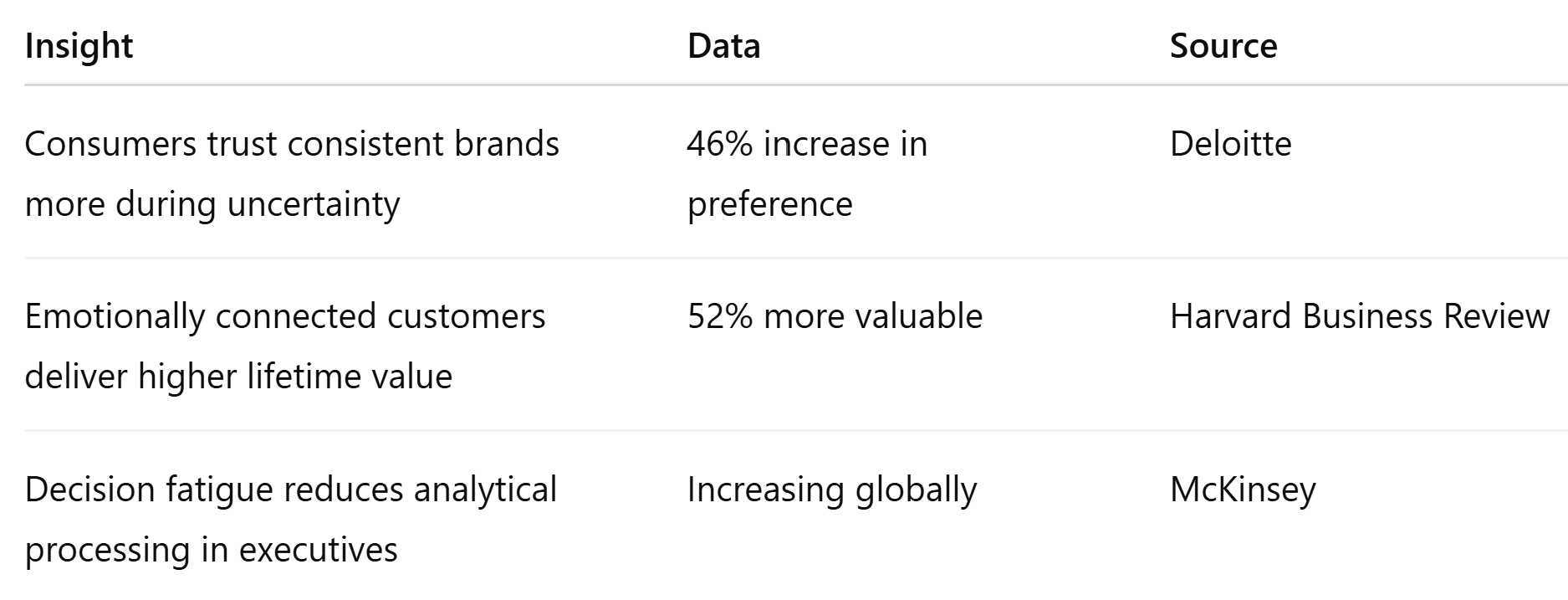
Why Future Branding Will Look More Like Behavioral Architecture
The next generation of branding teams will not study communication alone.
They will study:
behavioral psychology
perception science
cognitive fatigue
emotional timing
symbolic trust systems
Because AI is flattening informational advantage rapidly.
When every company can produce polished messaging instantly, the real differentiator becomes: how the brand feels before explanation starts.
This is where branding becomes less about campaigns and more about environmental perception design.
The strongest brands will increasingly optimize for:
interpreted confidence
emotional safety
symbolic authority
cognitive ease
perceived permanence
Not content volume.
That shift has already begun quietly across luxury, technology, finance, and premium B2B sectors.
Escape From Limitation
Human beings will always interpret signals faster than detailed analysis. That limitation cannot be removed. It can only be understood strategically.
Perception is not a byproduct of the decision.
It is the environment in which the decision is made.
The smartest brands therefore stop asking: “How do we explain ourselves more?”
And begin asking: “What is the market silently concluding about us before we even speak?”
Transformation Shift
Yatra yatra mano yāti tatra tatra śivo’vasthitaḥ
Wherever awareness moves, interpretation already exists.
The strongest brands shape that interpretation before the market consciously realizes it.
Conclusion
The future of branding will not belong to companies producing the most content. It will belong to companies reducing uncertainty fastest. Most brands still believe trust is built through communication volume. The strongest brands understand trust is often built silently through:
consistency
restraint
symbolic confidence
interpreted stability
environmental signals
A market rarely rewards the loudest company. It rewards the company that feels safest to trust.
The signal appears…
The perception forms…
The decision follows…