

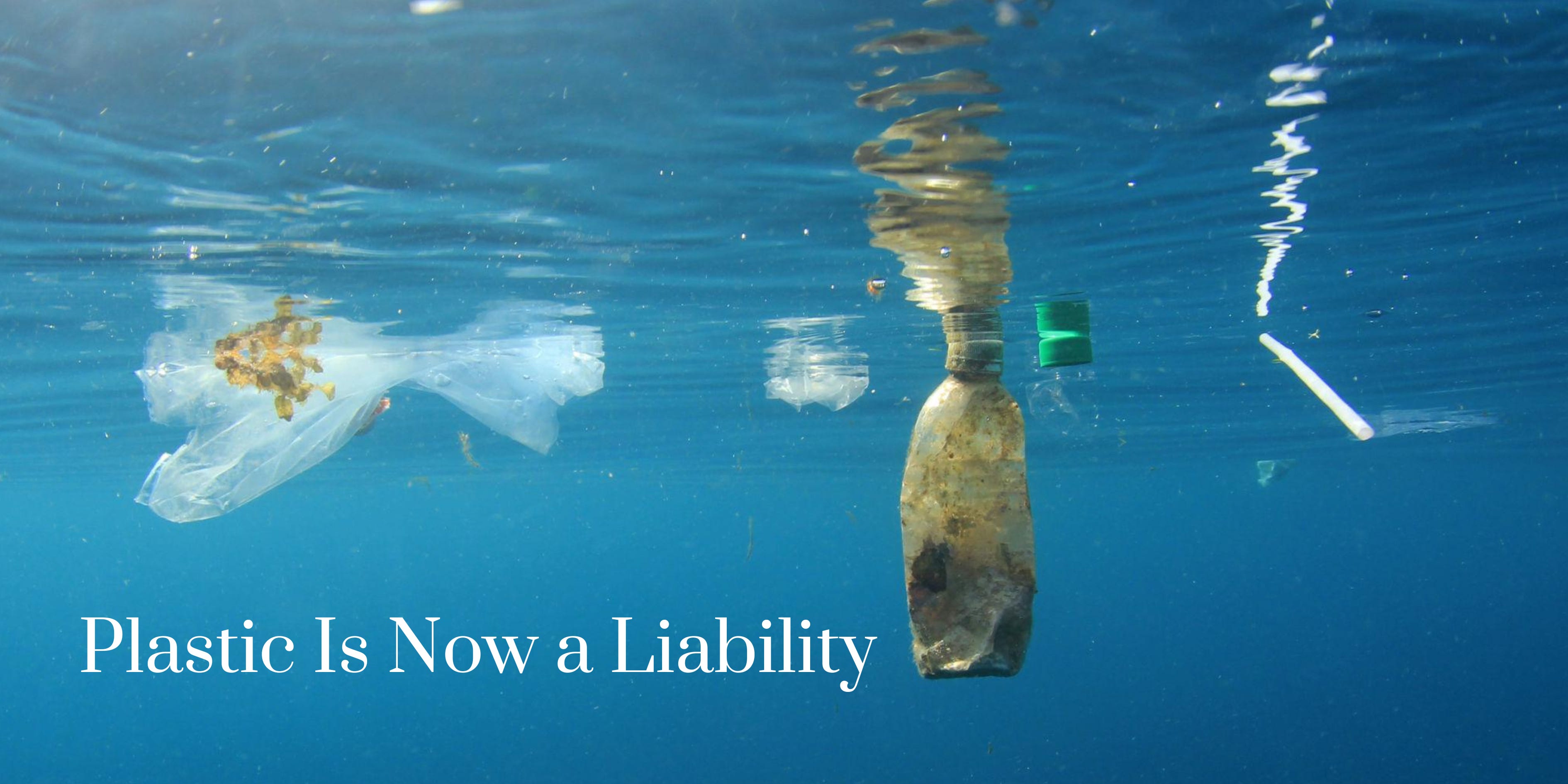
Plastic didn’t suddenly become a problem.
It became traceable.
And the moment something becomes traceable, it stops being invisible cost and starts becoming assignable responsibility.
That’s the shift most companies are underestimating.
And if you’re making material or sourcing decisions today, this is already inside your system. You just haven’t been forced to see it yet.
Because once responsibility is assigned, it doesn’t stay operational.
It becomes legal. Financial. Reputational.
And it rarely shows up where you expect it.
And this is exactly where a line from the Bhagavad Gita stops being philosophical and starts becoming operational:
Karmanye vadhikaraste ma phaleshu kadachana.
You are responsible for your actions, not just the outcome.
For years, most decisions in this space followed a simple logic:
If the outcome works, the decision is right.
Margins improved. Costs reduced. Output scaled. That was enough.
But the verse is uncomfortable precisely because it challenges that logic.
Because if you look closely, this is how most decisions are still being made.
Outcome first. Consequence later.
Because what the treaty is doing, in practical terms, is simple:
It is forcing accountability back to the point of decision.
That’s why this matters now.
It’s easy to think this is just about compliance.
That you’ll deal with it when it becomes unavoidable.
Here’s where people are getting this wrong.
They assume the risk is the fine. The $50M headline number. The enforcement.
But the fine is just the visible consequence.
The real risk builds quietly, in decisions that look efficient today but create exposure tomorrow.
Not immediately. Not visibly.
It shows up later.
When a buyer asks a question you can’t answer, and you realize the issue isn’t documentation, it’s design.
When a shipment gets flagged, and fixing it means changing something you can’t change overnight.
When a contract renewal comes back with conditions, and you understand too late that your current system doesn’t qualify.
That’s the moment this stops being theory.
And by then, the system you built is not something you can change fast enough.
Every unit of plastic that cannot be traced, recovered, or justified adds to that exposure.
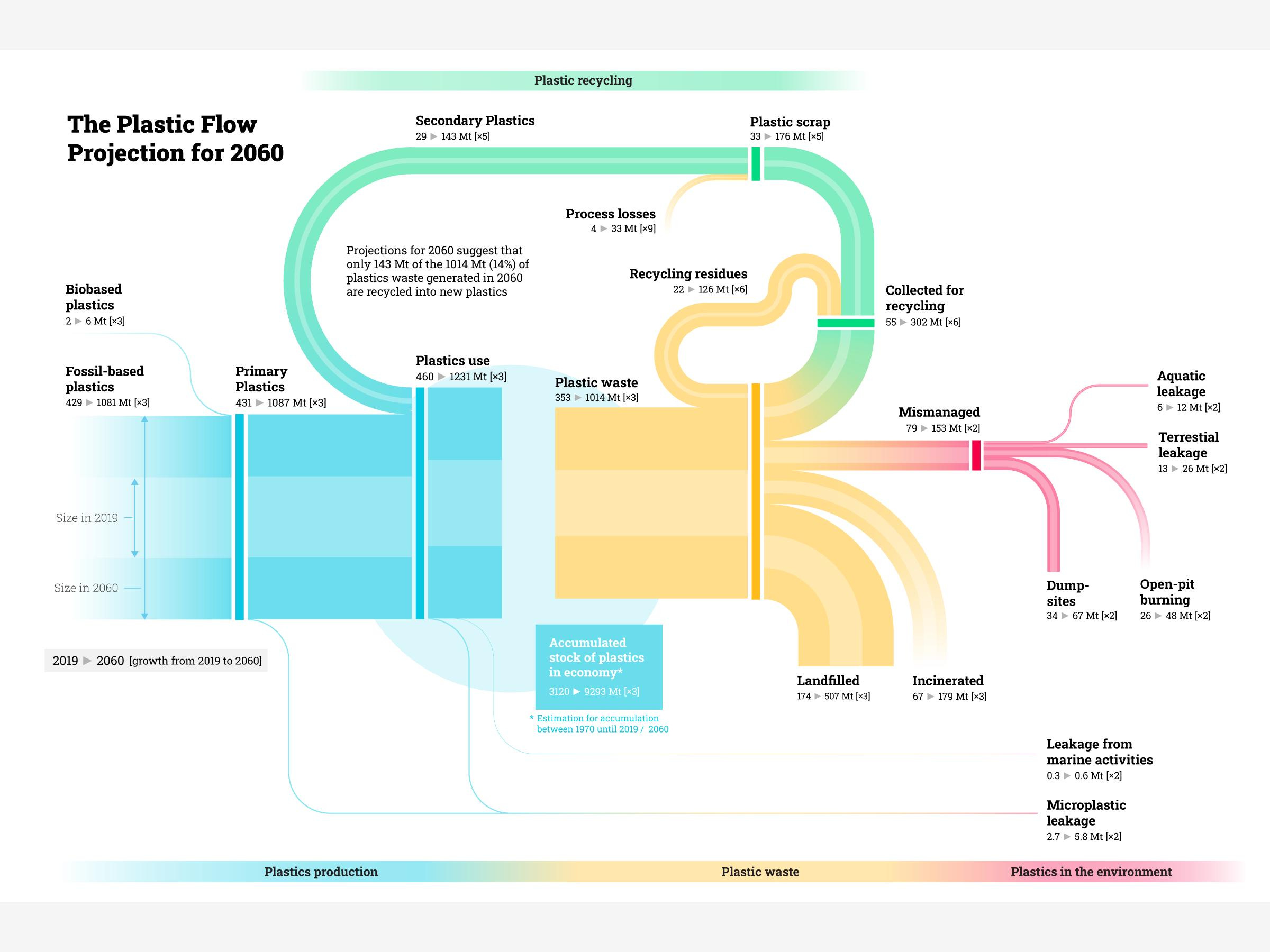
According to UNEP’s 2025 update, less than 10% of global plastic is effectively recycled. That means over 90% of what enters the system eventually becomes unmanaged waste or leakage.
Now imagine that not as an environmental issue, but as a liability chain.
If 10 units of plastic leave your system, and only one comes back into a controlled loop, nine units are unaccounted for.
That gap is where regulation is moving.
This is the Gita in practice.
You focused on the outcome. The system is now measuring the action.
Why Even Leaders Like Unilever Are Slowing Down
Unilever has been one of the most aggressive companies globally when it comes to reducing plastic.
Unilever committed to reducing virgin plastic, increasing recycled content and redesigning packaging to be reusable or recyclable.
On paper, this is exactly what the 2026 treaty expects.
But here’s what’s actually happening.
By 2025–2026, Unilever has had to revise and rethink parts of its plastic strategy, especially around flexible packaging like sachets.
Why?
Because:
recycling infrastructure is not ready at scale
multi-layer packaging still dominates key markets
cost of switching materials is significantly higher
supply chains are not aligned globally
This is where things get uncomfortable.
Because even with scale, capital, and intent, the system doesn’t move fast enough.
And when the system doesn’t move, pressure shifts inward.
Deadlines tighten.
Costs rise faster than pricing power.
Decisions that could have been gradual become urgent.
That’s the part most people don’t see.
And that’s the real insight most people miss.
If a company with:
global scale
supplier leverage
R&D capability
is struggling to transition fast enough…
Then smaller companies are not “lagging.” They are structurally unprepared.
That’s the real risk signal.
This is the Gita in practice.
The verse is not asking you to wait for perfect outcomes.
It is asking you to take the right action despite imperfect systems.
Here’s what the latest data is already signaling.
OECD’s 2025 plastics outlook update shows regulatory tightening accelerating across more than 60 countries, focusing on lifecycle accountability, not just waste management.
McKinsey’s 2026 sustainability analysis indicates that companies aligning early with circular models are seeing stronger investor confidence, with ESG-linked valuation premiums becoming more visible.
Deloitte’s 2025 circular economy report highlights that EPR frameworks are shifting cost burdens directly onto producers, turning waste into a financial responsibility rather than an externality.
If you map this mentally, it looks like a simple graph.
Earlier:
Cost ↓ → Profit ↑
Now:
Cost ↓ → Risk ↑ → Future Cost ↑↑
That curve is what most decision-makers are still underestimating.
This is also where United Nations SDG 12 quietly shifts from idealism to infrastructure.
Responsible consumption and production is no longer about reporting your intent. It’s about redesigning your system.
Because the question is no longer:
“How much plastic do you use?”
It’s:
“Can you account for what happens after you use it?”
That’s a very different question.
And it changes how decisions are made at the source.
At some point, this stops being about sustainability and becomes about clarity.
Waste → Something you could ignore
Liability → Something that follows you back
Cost → A number you optimize
Exposure → A risk you can’t fully control
Compliance → A checklist
Ownership → A decision you are judged by
Perception is not the result of action.
It is the environment in which decisions are judged.
And once that environment turns against you,
even correct decisions start looking insufficient.
Once regulators, investors, and customers see your system as irresponsible, recovery becomes expensive. And some positions, once lost, don’t come back easily.
That’s why early action feels costly, but late action becomes unaffordable.

This is not a future problem.
It’s a delayed one.
What this really means for you is not a massive overhaul.
It starts with one shift in how decisions are made.
Before approving any material, ask:
If this leaves our system, can we still stand behind it?
That question alone changes procurement, design, and accountability.
And that is exactly what the verse is pointing to.
Not control over results. Control over action.
Key Takeaways
Plastic is no longer an operational leftover, it is a traceable liability
Cost decisions without lifecycle visibility are incomplete decisions
Regulation is accelerating toward accountability, not compliance
Early redesign creates stability, delayed response creates exposure
Responsibility at the source is now a competitive advantage
FAQ Section
What is the 2026 plastic treaty?
It is a global regulatory framework focused on reducing plastic pollution through lifecycle accountability, including production, usage, and waste management.
Why is plastic becoming a liability for businesses?
Because regulations are shifting responsibility back to producers, making them accountable for post-use outcomes of their materials.
How will this impact supply chains?
Companies will need traceability, recyclable design, and recovery systems, or risk losing contracts and market access.
What is the first practical step to adapt?
Start mapping where your plastic goes after it leaves your system and identify gaps in recovery or accountability.
Conclusion
The verse remains simple. But its meaning has changed in today’s context.
You are responsible for your actions, not the outcome.
Earlier, that sounded philosophical.
Today, it’s something your system will be tested against.
Not in theory.
In contracts, compliance, and continuity.
You don’t control regulation
You don’t control outcomes
You control how early you act