

नेहाभिक्रमनाशोऽस्ति प्रत्यवायो न विद्यते ।
स्वल्पमप्यस्य धर्मस्य त्रायते महतो भयात् ॥Meaning - “In this path, no effort is ever lost and no obstacle prevails. Even a little progress on this path protects one from great fear.”
You delete a blurry screenshot from your phone without thinking twice.
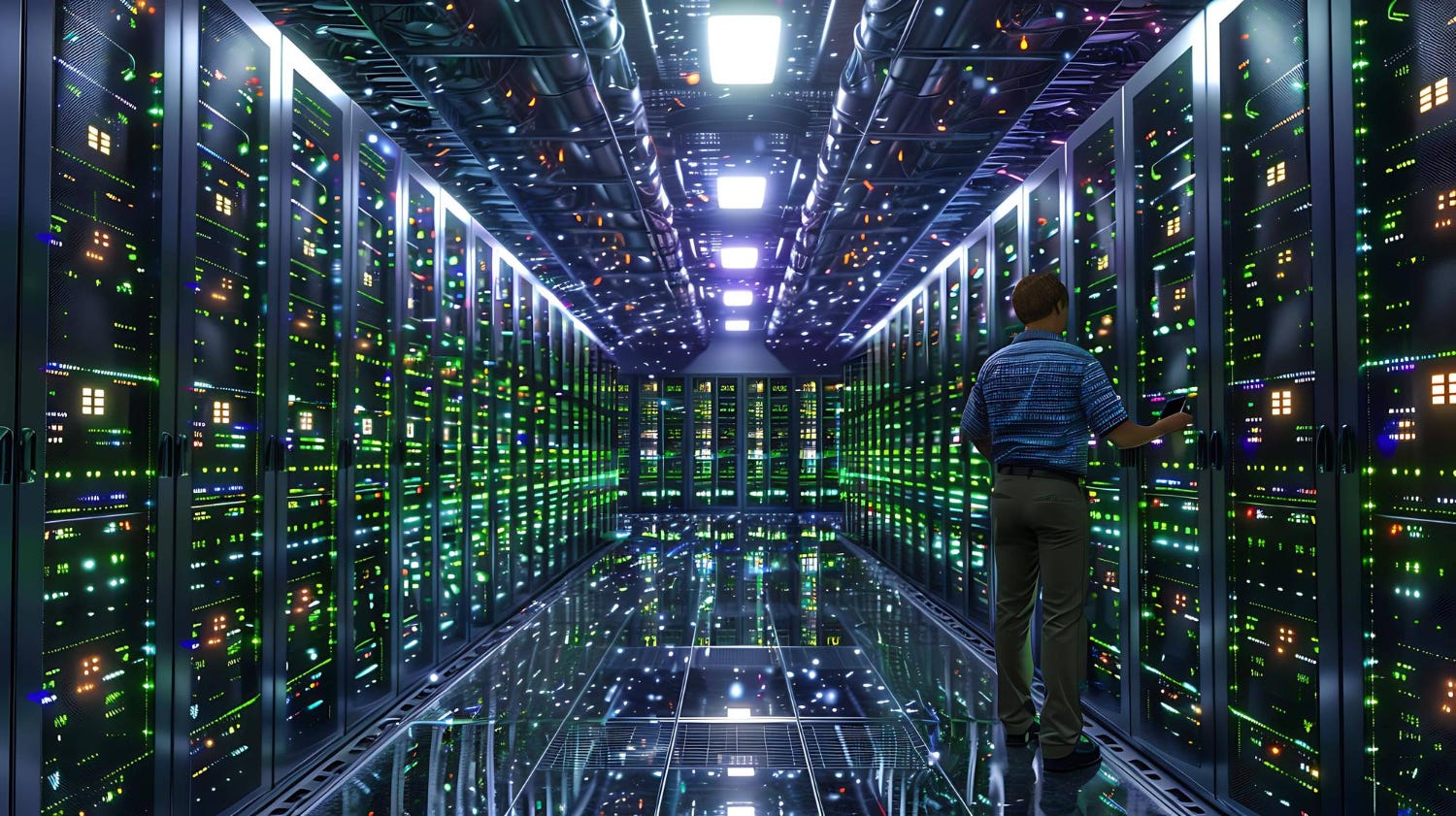
But somewhere else, thousands of servers are still cooling, processing, storing, backing up, and powering information most people will never open again.
That is the uncomfortable truth behind the modern digital carbon footprint.
For years, digital behavior escaped scrutiny because it never felt physical. Streaming a video, uploading a file, generating an AI image, saving 4,000 photos in the cloud, forwarding unnecessary attachments, or keeping years of unread emails all felt weightless.
The infrastructure carrying those actions is not.
Thousands of years later, that idea feels strangely relevant to the internet.
Because digital systems were designed to remove the feeling of consequence.
And that is exactly why digital consumption is scaling faster than human awareness.
The Shift Most Systems Were Never Designed For
The internet trained us to believe invisible actions create invisible consequences.
That assumption is now breaking.
The rise of AI systems, cloud storage, endless streaming, and frictionless digital behavior has quietly created one of the fastest-growing infrastructure pressures in the modern economy.
According to The Guardian, the average person’s online activity can generate roughly 448 kg of CO₂ annually.
Most people never emotionally process this because digital consumption lacks physical feedback.
You do not hear the servers.
You do not see the cooling systems.
You do not feel the electricity load behind an AI prompt or a cloud backup.
So behavior scales without resistance.
This is where the digital carbon footprint becomes more than an environmental issue.
It becomes a systems-thinking problem.
Earlier, waste was visible.
Factories produced smoke.
Plastic accumulated physically.
Fuel consumption had visual consequence.
Now, consumption happens silently through screens.
That changes human behavior dramatically.
This is the Gita in practice.
Humans rarely ignore consequence because they disagree with it.
They ignore it because the system delays the feeling of consequence long enough to appear harmless.
Why Digital Efficiency Is Quietly Increasing Infrastructure Demand
Digital transformation promised efficiency.
In many ways, it delivered it.
Paper reduced.
Communication accelerated.
Remote work expanded.
Storage became limitless.
AI improved productivity.
But there was an unintended consequence.
Digital efficiency removed psychological friction.
Earlier:
Physical storage created visible limitation.
Now:
Cloud storage creates infinite behavioral expansion.
That single shift changed consumption patterns globally.
Today, people save:
duplicate photos
unused recordings
unnecessary backups
old presentations
unread newsletters
repeated downloads
years of forgotten data
Not because they need them.
Because digital systems removed the emotional cost of keeping them.
The cloud feels invisible.
The infrastructure behind it is not.
According to International Energy Agency projections, global data-center electricity consumption could approach 945 TWh by 2030 as AI and cloud demand scale rapidly.
That matters because the modern economy increasingly depends on infrastructure most users never think about.
If you are using AI tools daily today, this already includes you.
Every frictionless digital interaction still relies on:
servers
water cooling
energy grids
semiconductor infrastructure
backup systems
transmission networks
The hidden contradiction is this:
Digital experiences became cleaner emotionally while becoming heavier physically.
That is a profound systems failure.
The One Tiny Habit That Explains the Entire Problem
Deleting one email will not save the planet.
But the psychology behind unnecessary digital accumulation explains almost everything about the modern digital carbon footprint.
Imagine this:
One million people keep just 1 GB of unnecessary cloud storage for years because deletion feels irrelevant.
The files feel invisible.
But somewhere:
servers still power them
cooling systems still support them
backup systems still duplicate them
infrastructure still expands around them
This is why tiny digital behaviors matter at scale.
Not because one person changes the world instantly.
Because billions of frictionless habits quietly shape infrastructure demand.
A European workplace sustainability initiative reportedly reduced unnecessary attachment-heavy internal emails and duplicate cloud storage across teams.
The surprising result was not only lower storage demand.
Employees also reported:
cleaner workflows
lower notification fatigue
easier file retrieval
less digital clutter
faster collaboration systems
That is the insight most companies miss.
Sustainability improves when systems reduce unnecessary accumulation itself.
“Even a little effort protects from great fear” was never about perfection.
It was about interruption.
Small conscious actions interrupt large unconscious consequences.
What Most Companies Misunderstand About the Digital Carbon Footprint
Most ESG conversations still focus on visible industries:
manufacturing,
transport,
plastic,
energy,
supply chains.
But digital infrastructure is becoming one of the largest invisible operational systems in modern business.
That creates a dangerous executive blind spot.
Because digital growth still feels environmentally neutral psychologically.
It is not.
Earlier: Digitization → Efficiency Gain
Now: Digitization → Compute Expansion → Infrastructure Exposure
This becomes even more uncomfortable with AI.
According to reporting covered by Reuters, indirect emissions from major AI-focused technology companies rose sharply between 2020 and 2023 as AI infrastructure expanded.
Even companies leading digital innovation are struggling to balance AI growth with sustainability commitments.
Microsoft acknowledged that AI infrastructure growth complicated parts of its climate ambitions because expanding data-center demand increased energy pressure faster than expected.
That changes the conversation entirely.
This is no longer about “good” or “bad” technology.
It is about invisible infrastructure scaling faster than public perception.
This is where many leadership teams realize visibility came too late.
When Sustainability Stops Being Reputation and Becomes Infrastructure
The biggest mistake companies make today is treating sustainability as communication before systems design.
That logic no longer holds.
Because people are beginning to question the infrastructure behind convenience itself.
Perception is not the result of action.
It is the environment in which actions are judged.
That line matters deeply in the AI era.
Consumers increasingly want to know:
where digital systems run
how AI is powered
how much infrastructure supports convenience
whether endless digital expansion is sustainable
Trust is slowly shifting from: brand messaging → operational visibility.
This is where sustainability stops being branding and starts becoming traceability.
If you are making digital scaling decisions today, this matters more than most organizations realize.
Because invisible systems eventually become visible under scrutiny.
Some reputational positions do not fully recover.
“The internet feels clean because the infrastructure is geographically distant.”
That single sentence explains the emotional architecture of the digital economy.
Why People Still Delay Action
Most people are not intentionally irresponsible.
They are psychologically detached from consequence.
That distinction matters.
People rarely ignore sustainability because they disagree with it.
They ignore it because consequences feel delayed, invisible, and distributed across systems they never physically encounter.
The same applies inside companies.
Executives optimize:
speed
growth
convenience
engagement
productivity
Very few optimize digital restraint.
Because restraint feels economically counterintuitive in growth-driven systems.
But this is where operational risk quietly builds.
The exposure leaders ignore today may become tomorrow’s infrastructure accountability crisis.
“Digital convenience removed the feeling of consumption while massively increasing physical infrastructure demand.”
The One Decision That Changes Everything
The solution is not digital guilt.
It is digital awareness.
Ask one uncomfortable question before scaling any digital behavior:
“If this activity increased 100 times tomorrow, would the infrastructure supporting it still feel justified?”
That single filter changes:
cloud storage culture
AI implementation
unnecessary data retention
meeting overload
digital duplication
infrastructure planning
Deleting one unnecessary email changes almost nothing.
Designing systems that reduce unconscious digital accumulation changes infrastructure demand itself.
That is the real shift.
Not perfection.
Awareness.
This is the Gita in practice.
Even a little conscious effort changes the trajectory of invisible consequence.
What This Really Means Now
The digital carbon footprint is not ultimately about emails, cloud storage, or AI prompts alone.
It is about a civilization that became emotionally disconnected from the physical systems supporting convenience.
That is the deeper risk.
Decision Model:
Trigger: Rapid AI and digital infrastructure growth
Delay: Digital activity feels immaterial
Rationalization: “One action is too small to matter”
Exposure: Infrastructure demand compounds silently
Consequence: Energy pressure, water demand, and emissions scale invisibly
Better Response
Build conscious digital systems before infrastructure consequences intensify
The future will increasingly reward companies and individuals who understand something simple:
Frictionless experiences still rely on physical systems somewhere.
“A market rarely punishes exposure immediately.
It punishes the moment trust becomes difficult to restore.”
Frequently Asked Questions
What is a digital carbon footprint?
A digital carbon footprint refers to the emissions and infrastructure demand created by online activity such as emails, cloud storage, streaming, AI usage, and internet browsing.
Does deleting emails really reduce emissions?
One email alone has little impact. The larger issue is reducing unnecessary digital accumulation at scale, which lowers storage and infrastructure demand over time.
Why do AI systems increase environmental pressure?
AI systems require significant computing power, data-center infrastructure, cooling systems, and electricity consumption to operate continuously.
Why is cloud storage not actually invisible?
Cloud storage depends on physical servers, cooling systems, backup infrastructure, and power grids located in large-scale data centers globally.
What is one realistic habit that helps?
Reducing unnecessary digital storage, extending device life, turning off autoplay, and limiting duplicate cloud backups are small but scalable actions that reduce infrastructure demand.
Final Note
The system accumulates…
The signal arrives late…
The consequence rarely does….